
In-Depth Analysis of the Fool Card: Advanced Tarot Reading Techniques and Practical Applications
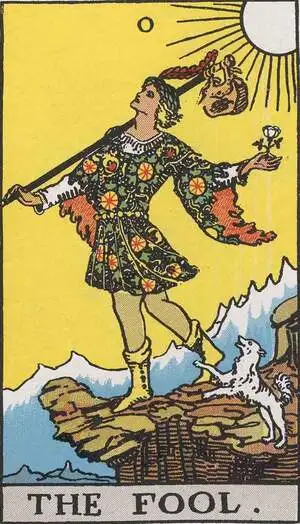
Many people understand the Fool as "act immediately," but advanced interpretation focuses on \"experiential unknowns." I will guide you from the images of different decks, psychological exploration mechanisms to a four-step practical framework, interpreting the Fool as a brave yet bounded starting point. The article includes real cases, comparative combinations, scenario applications, and practice tools to help beginners ground their inspirations, ensuring that every time the Fool appears, it can translate into actionable steps within 48 hours.
In-Depth Analysis of the Fool Card: Advanced Tarot Reading Techniques and Practical Applications
The first time I seriously looked the Fool in the eye was on an autumn evening. Outside, the tree downstairs had just dropped its first leaf, and a girl in a beige knit sweater sat across from me, her fingers tracing circles around the rim of her cup. She asked, "If I quit my job now, would that be too impulsive?" By that time, I had been reading cards for years, but the moment the Fool turned up, I couldn't help but smile—it always feels like someone who's just packed their bags is waiting at the door for you to open it. I later discovered that many beginners see the Fool as synonymous with "new beginnings," but a deeper exploration reveals it holds more complex and practical layers.
Why Advanced Readings Start with the Fool
The Fool is numbered 0, a unique number in Tarot. It is neither a starting point nor an ending point; rather, it represents a state of being "on the road even before you begin." Beginners often say, "If the Fool appears, does that mean I should take immediate action?" In my experience, the Fool serves more like a passport, allowing you to take a small step in uncertainty to validate your feelings. It is concerned with "experiential adventures" rather than "reckless changes."
I find that behind every choice that causes hesitation, there are two systems pulling at you: one is the safety system, and the other is the exploration system. The Fool symbolizes the exploration system, but the key to advanced interpretation is to set boundaries for exploration—this way, you can travel further rather than just faster.
Rediscovering Visual Details: The Fool Across Different Decks
Many people read the Fool focusing solely on "the backpack, the white dog, the cliff," but the details in different decks can subtly alter its tone.
The Rider-Waite Fool
He looks up, almost not watching his feet, holding a white flower with a small backpack. There’s sunshine, mountains, and a dog. For me, this imagery emphasizes a blend of "confidence" and "naivety"—it’s not about the absence of risk, but rather the belief that someone will be there to remind you along the way (the dog's bark is significant). In a reading, this often indicates "a supported initial attempt."
The Thoth Fool
With more vibrant colors and symbols: a horn, vines, an alligator, bubbles. It portrays "potential" in a very flamboyant way, as if stuffing all possibilities into a single moment. When I use Thoth, the Fool often indicates "multi-directional beginnings," not just one path, but several that are shining. This requires you to pick one to try out, without expecting to determine your fate all at once.
The Marseille Fool
Often labeled as "Le Mat," dressed somewhat raggedly, with a dog that seems to be tugging at his pants. The Fool here has a sense of being "pushed by life." For passive changes (like a job shift, city power cuts, or sudden pandemics), the Marseille Fool reminds you: stabilize yourself first and patch your clothes as you go.
From "New Beginnings" to "Testing Grounds": The Theoretical Framework
The essence of the Fool is transforming the "unknown" into an "experiential unknown." I often use a small framework to read it:
- 0 Position (Potential): You haven't changed your identity yet, but you have shifted your focus away from old narratives.
- Boundaries (Cliff): It’s not about "danger," but rather a line that "reminds you to watch your step." Seeing the line allows you to decide how far to leap.
- Support (White Dog/Observer): In the real world, these are the ones who will call out to you—friends, mentors, journal entries, bodily signals.
Psychologically, the Fool closely aligns with the concepts of "behavior activation" and "gradual exposure": it’s not about changing your life all at once, but breaking change into manageable chunks, starting with what you can handle. Your brain needs evidence to believe that "the new path is not frightening," and that evidence comes from action, not imagination.
Four-Step Practical Method: Reading the Fool More Accurately
In my consultations, I often use a "four-step method," where each step provides a clear grounding when the Fool appears.
- Positioning the Context (Where it appears in the spread)
- In the "core position" of the question, it is your true driving force; in the "external influence position," it represents new opportunities in your environment; in the "action suggestion position," it indicates "try first, decide later."
- Capturing the Driving Force (Ask three questions)
- Where does this impulse come from? Who/what does it prompt me to meet or where does it lead me? What would I lose if I didn’t act?
- Establishing Risk Boundaries (Make a list)
- List three costs you're willing to bear and three you absolutely won't. The Fool fears the "all or nothing" approach, which leads to procrastination.
- Designing Micro-Actions (Executable within 48 hours)
- Break down a large decision into a small action you can accomplish within 48 hours, like scheduling an informational interview, sending out a resume, doing a small investment simulation, or spending an hour alone in a new café.
I remember once a guy drew the Fool in the "action suggestion position." He thought it meant "quit my job now." We broke quitting down into three small steps: talking to someone in the target industry, creating a prototype over the weekend, and managing his savings in layers. Three weeks later, he hadn’t quit yet but felt more certain because those three small actions gave him evidence.
Upright and Reversed: Not a Simple On/Off Relationship
Many beginners interpret the reversed Fool as "do not start." In my experience, the reversed position is more like "check your safety rope before you start."
- Upright: Experimental courage, light-heartedness, curiosity about the unknown. The advice is "take a step first, then observe the feedback."
- Reversed: Insufficient boundary awareness, incomplete information, or treating small experiments as major transitions. The suggestion is "gather information/find companions before stepping forward."
I often make a comparison:
- Fool Upright + Emperor: Try first, then set the rules. Document good practices from the experiment.
- Fool Reversed + Hierophant: Consult first, then act. Seek the "traditional way to do this," and you will feel more at ease.
- Fool Upright + Magician: Skills are sufficient; be bolder in experiments.
- Fool Reversed + Devil: Beware of the illusion of "freedom," as old habits may be pulling you back.
Real Case Study: She Doesn’t Want to Quit; She Just Needs a Safety Net
That girl in the beige knit sweater spoke with a trembling voice, repeatedly asking me, "Is this accurate?" She said, "I’ve been in the same internet company for five years, my position is stable, but I wake up every day feeling like I’m about to take a retest. I’m not asking whether I should quit; I just want to know if I’m avoiding something."
I used a simple three-card spread: Current Situation—Driving Force—Action. The second card turned up as the Fool upright, and the third was the Four of Pentacles reversed. I noticed her grip on her cup tightened when she heard the word "Pentacles."
I said, "You aren’t avoiding; you’re looking for a breath of fresh air. The Fool in the driving force position indicates you need a bit of new air, but the Four of Pentacles reversed warns you to ensure that your actions do not compromise your safety net. Shall we design a significant step that doesn’t touch your liquid funds?"
After a moment of silence, she said, "I could sit in on a stand-up meeting at a startup in the same city this weekend; a friend works there." We added two more small actions: making a distribution chart for her savings and only altering two areas of her resume instead of overhauling it completely. Throughout the month, she didn’t leave her job, but she no longer woke up feeling like she was about to take a retest. Later, she did change jobs six months later. When she left, she didn’t say it outright, but she seemed much more relaxed than when she came.
I also have moments where I misread. Once, the Fool reversed made me think it meant "don’t act yet," but later, the consultant told me it was precisely that day an old colleague who had lost contact offered him a short-term project opportunity. That time I learned: the Fool reversed doesn’t mean "stop"; it means "pause to see clearly what you need to bring on your journey."
Specific Applications to Different Questions
- Relationships: The Fool appearing doesn’t necessarily mean a "new romance"; it could also suggest "new attempts within an old relationship." For instance, if a couple always stays home watching movies, they might try a "joint study" date. In the reversed position, don’t use "open relationships" to mask unwillingness to communicate.
- Career: Change "changing industries" to "changing task types." First, aim for a small project across teams to simulate the rhythm of the new industry. Upright encourages trial and error, while reversed warns about financial and reputational boundaries.
- Health and Habits: The Fool favors "micro-actions." Walk for ten minutes each day, swap out snacks for a protein option, and avoid committing to a three-month gym plan all at once. In the reversed position, find a partner or coach first.
- Interpersonal and Social: If you fear social situations, it’s often a fear of judgment. The Fool suggests visiting a space where you won’t be recognized—like a newly opened bookstore’s book club. When reversed, prepare an "exit plan" to give yourself an exit strategy at any moment.
- Learning and Creation: Start with a "rough prototype." The Fool isn't afraid of imperfection; it fears inaction. In the reversed position, first set a delivery time to create a small pressure boundary for yourself.
Common Misconceptions and Corrections
- Misconception 1: Fool = Impulsiveness. Correction: It resembles "low-cost experimentation" more. Please slice your actions into manageable chunks.
- Misconception 2: Fool = Immaturity. Correction: Innocence fuels the Fool, but maturity guides its direction. Place curiosity within realistic contexts.
- Misconception 3: Fool appearing = immediate life change. Correction: Start by changing one hour in your day, then assess if a year’s change is warranted.
- Misconception 4: Reversed = Denial. Correction: Reversed reminds you to first find your safety rope—information, budget, companions, and exit mechanisms.
Advanced Exercises and Tools
- Fool's Three Questions Writing Method: Spend five minutes daily answering, "What small thing do I want to try today? What am I willing to bear? Who can remind me?"
- Body Signals Check: When thinking about this new endeavor, are your shoulders tense or relaxed? The Fool’s "yes" often accompanies a physical easing.
- 48-Hour Small Steps List: List ten small experiments you can do within 48 hours, and wager with friends on who can finish three first.
- "The Fool's Backpack" card spread (five cards): What's in the backpack (resources), the cliff beneath (boundaries), the dog's bark (reminders), the sun's position (timing), the first step's path (micro-action).
Insights from Combinations with Other Major Arcana
I’ve found that the Fool’s combinations can lead "experimentation" in various directions:
- With The Hermit: Solo experimentation. Tune down external voices, akin to conducting personal research.
- With The Chariot: Short-term high-intensity experiments. Push hard for two weeks; don’t procrastinate.
- With Strength: Treat emotions in experimentation as allies. Fear doesn’t equal wrong.
- With The Star: Experiment gently; focus on recovery and inspiration without pushing yourself to the brink.
- With The World: A signal that the experiment has ended. You have gathered sufficient evidence to elevate your identity recognition.
Conclusion: For You on Your Journey
The Fool is not a "smarter person"; it’s a "more willing person to take the first step." After all these years of Tarot reading, I still feel a warmth in my heart when it appears—it reminds me that all significant changes start with a small experiment. If you’re standing at the door, unsure whether to step outside, pack your bag well, listen to that dog’s bark, and then take that step. You don’t need to understand everything or be perfect. You just need to start.
If you’re willing, we can design that step together to make it safer and more aligned with your life rhythm. The Fool in Tarot would be more than happy to be your companion.